Programmatic B2B

All Posts

All Posts

The Origins of Account-Based Marketing (Part 1 of 3)

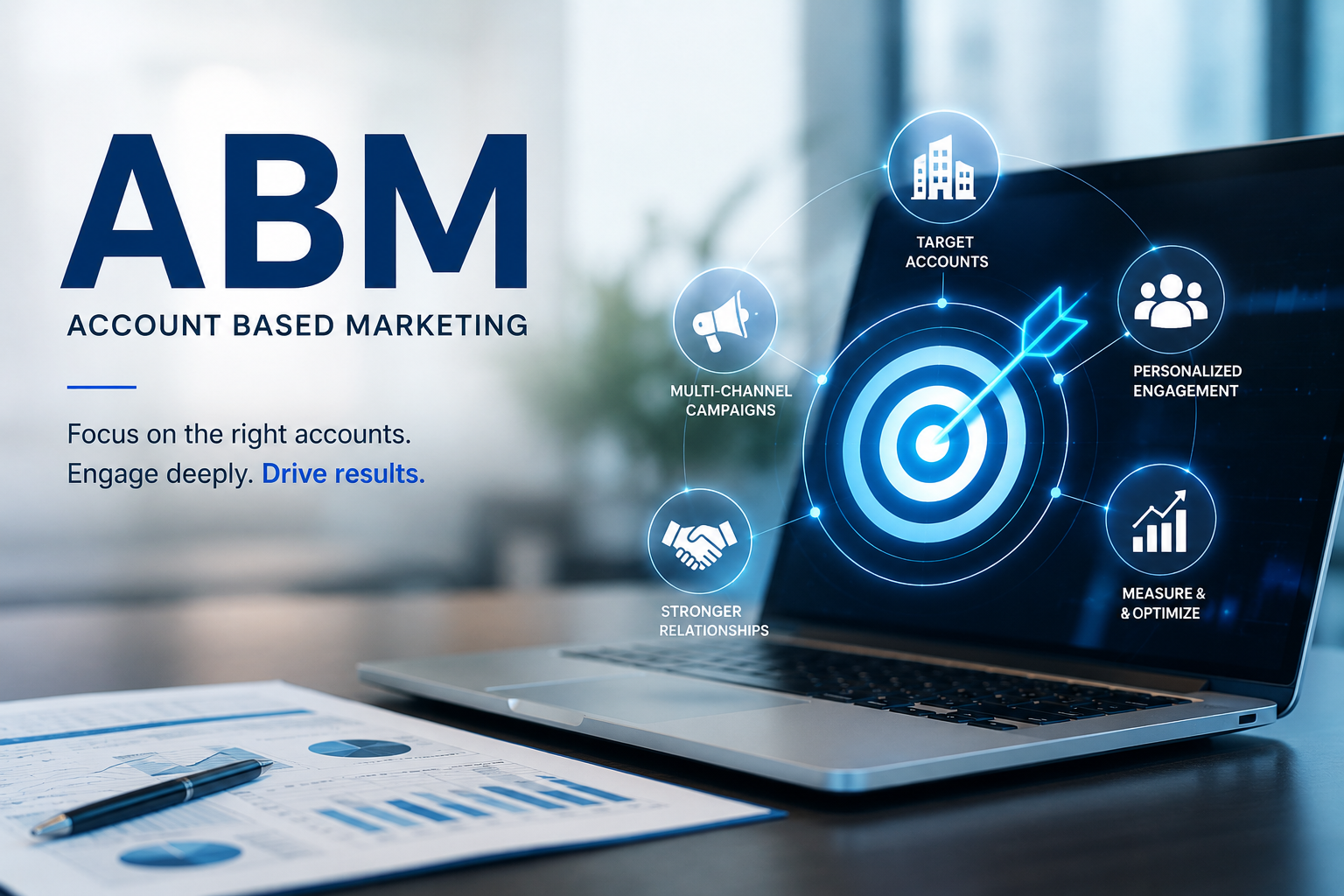
The Origins of Account-Based Marketing (Part 1 of 3) Chris DeMartine October 14, 2026 B2B marketing did not always work the way it does today. Before account-based marketing (ABM) became standard practice, most B2B teams followed a very different approach, one that ABM was eventually built to replace. To understand what made ABM such a significant shift, it helps to first look at what came before it. B2B Marketing Before ABM For most of B2B marketing’s history, the dominant model was demand generation aimed at as wide an audience as possible. This approach, often called “spray and pray,” had a few defining characteristics: Campaigns were built around broad target personas or industries rather than specific named companies. Success was measured in volume: total leads captured, total downloads, total webinar sign-ups. Marketing handed off large batches of leads to sales, many of which had little real buying intent or fit. Sales teams spent significant time qualifying and disqualifying leads that marketing had already spent budget acquiring. Messaging was generic by necessity, since one campaign had to speak to hundreds or thousands of different companies at once. This model worked reasonably well for lower-cost, higher-volume products, where a large number of small deals could offset a low conversion rate. It worked far less well for companies selling complex, high-value B2B products or services, where the buyer is not one person but a group of stakeholders inside a specific organization. Defining Account-Based Marketing ABM flips the traditional funnel. Instead of casting a wide net and filtering leads down to find viable accounts, ABM starts by identifying the specific companies most likely to become valuable customers, and builds marketing and sales efforts around reaching the right people inside those companies. At its core, ABM treats an account, not an individual lead, as the unit of marketing. A single target account might include multiple stakeholders: a decision maker, one or more influencers, a champion advocating internally, and someone in procurement, and ABM strategy is built to reach and engage all of them with relevant messaging, rather than treating each as an isolated lead in a funnel. This concept was not new when it gained popularity. Enterprise sales teams had informally practiced versions of account-based selling for decades, running dedicated outreach for a handful of strategic accounts. What changed was that marketing teams began applying that same logic systematically, treating account-based targeting as a repeatable strategy rather than an occasional exception for the biggest deals. The Impact ABM had on B2B Marketing ABM addressed several of the core inefficiencies in broad demand generation. It brought tighter alignment between sales and marketing, since both teams worked from the same account list, so marketing stopped generating leads that sales considered a poor fit, and sales gained visibility into which accounts marketing was actively engaging. Budget saw better use on high-value opportunities, concentrating spend on the accounts most likely to convert into meaningful revenue rather than spreading it thin across a large, loosely qualified audience. Messaging became more relevant, tailored to a specific account’s industry, challenges, and stage in the buying process instead of relying on generic content built to apply to everyone. Metrics grew clearer and more meaningful, with engagement tracked at the account level rather than as raw lead volume, tying activity more directly to pipeline and revenue outcomes.  Where Early ABM Hit Its Ceiling Early ABM delivered real results, but it also had a practical limit. Building personalized campaigns for each target account required significant manual effort, from research to content creation to media buying, which made it difficult to run true ABM against more than a small number of accounts at a time. Verifying that ads and content were actually reaching people at the right companies was also difficult without better data and targeting infrastructure. That limitation set the stage for the next phase of ABM’s evolution, covered in the next part of this series: how programmatic, AI-driven technology took the account-based principle and made it scalable, verifiable, and far more precise, an evolution that programmaticb2b has built its approach around. Recent Posts 14 Oct 2026 The Origins of Account-Based Marketing (Part 1 of 3) 26 Jun 2026 How to Target Insurance Company Decision Makers with a Verified B2B Database 18 Jun 2026 ChatGPT Ads for B2B Advertisers Categories ABM Account Based Marketing 4 Adobe Marketing Cloud 1 All Posts 61 B2B Marketing 5 Data-Driven Marketing 7 Getting Started 4 Man Plus Machine 4 Programmatic Advertising 6 Your Community 2 Subscribe to Get latest post notifications Need Assistance? We’re here to Help you CONTACT NOW

The Origins of Account-Based Marketing (Part 1 of 3) Read Post »

Insurance
All Posts

How to Target Insurance Company Decision Makers with a Verified B2B Database

How to Target Insurance Company Decision Makers with a Verified B2B Database Chris DeMartine June 26, 2026 The US insurance sector is one of the most fragmented enterprise markets to sell into. Hundreds of individual organisations, each structured differently, each buying differently, and each with their own set of decision makers sitting behind layers of procurement. These companies buy constantly. Claims systems, underwriting platforms, cybersecurity, cloud infrastructure, compliance tools, data and analytics platforms, HR technology, marketing services, professional services. The buying never stops because the operational demands never stop. Every system gets upgraded. Every regulatory change creates a new requirement. Every growth target creates a new vendor conversation somewhere inside these organisations. Reaching the right person inside one of these organisations is a deliberate process. Reaching the right people across thirty or forty of them at the same time, each in the right function at the right seniority level, is where having the right data makes all the difference. That is the gap this database fills. What is an insurance prospect database An Insurance prospect database is a ready-to-use collection of verified business contacts across the US insurance industry, organised in a way that lets you target by company, job function, seniority, geography, and sub-sector. The difference between a good one and a great one comes down to two things: how the data was built and how recently it was verified. A well built database gives you direct contacts for the actual professionals sitting in the roles you care about, with enough segmentation to make sure your campaign is talking to the right person at the right company. For a vendor selling into this sector, that foundation changes how everything runs. Emails land, display reaches real people, and the audience your sales team follows up with is the same audience your marketing actually reached. What the database gives your team A curated, revenue-ranked list of Fortune 1000 insurance companies with verified contacts of professionals actively working in those roles today. Accurate, compliant business contact data ready for high-deliverability campaigns from day one. No cleansing required. Audience segmentation across property and casualty insurers, life insurance companies, mutual insurance groups, specialty carriers, and insurance brokerages so your message always reaches the right sub-sector. Custom audience construction using job title keywords, seniority filters, revenue bands, geography, and insurance-specific industry classifications built around your exact ICP. Direct access to budget holders and decision-makers with real procurement authority, filtered away from contacts who look relevant but cannot move a deal forward. A ready-to-activate foundation for account-based marketing that aligns your sales and marketing teams around the same high-value insurance accounts. The real competitive advantage There is a version of selling into the insurance industry where your sales team is always one step behind. Chasing the right contact. Waiting on a response that never comes. Losing a deal at the final stage to a competitor who was already familiar to the CFO before the contract arrived. A verified, purpose built database puts you a step ahead instead. Your campaign reaches the right people before your sales team picks up the phone. Your brand shows up in the right places before the buying conversation starts. And when the deal moves toward a signature, the people in the room already know who you are. That sequence of awareness before outreach and familiarity before approval is what this database is built to create. Programmatic B2B takes the database and builds the full campaign around it. Using the verified insurance contact data we design targeted email and display campaigns that reach the exact decision makers your solution is built for. Every campaign comes with customised account level reporting that shows exactly which companies engaged, which roles responded, and how the audience moved through the programme. Your sales team does not get a list of leads to guess at. They get a clear, real picture of which accounts are warm, who is paying attention, and where the conversation is ready to start. Bottom line Precision is not a nice-to-have in this sector. It is the difference between a conversation and a missed opportunity. When the data is right, the door is already half open. Recent Posts 26 Jun 2026 How to Target Insurance Company Decision Makers with a Verified B2B Database 18 Jun 2026 ChatGPT Ads for B2B Advertisers 18 Apr 2026 Travel Prospect Database: Target the Right Buyers, Faster Categories ABM Account Based Marketing 4 Adobe Marketing Cloud 1 All Posts 60 B2B Marketing 5 Data-Driven Marketing 7 Getting Started 4 Man Plus Machine 4 Programmatic Advertising 6 Your Community 2 Subscribe to Get latest post notifications Need Assistance? We’re here to Help you CONTACT NOW

How to Target Insurance Company Decision Makers with a Verified B2B Database Read Post »

All Posts

ChatGPT Ads for B2B Advertisers

ChatGPT Ads for B2B: Capturing Early-Stage Buyer Intent Chris DeMartine June 18, 2026 Great B2B growth has always been part discipline, part experiment. Your business likely has a solid engine running already, with core campaigns driving results and proven strategies doing the heavy lifting. None of that is going anywhere, but there’s always room to test something new. And right now, there’s a quiet shift happening in how buyers do their research behind the scenes. They aren’t just typing short, generic phrases into a browser anymore. They’re opening a chat window and having a full conversation with AI. They’re pasting in messy, highly specific scenarios about their tech stack, their budget, and their exact pain points, and asking an AI for guidance. For B2B marketers, that’s a brand new opportunity to reach high-intent buyers right in the middle of their research. So how do you actually show up in those conversations? That’s where ChatGPT Ads come in. Meeting Buyers in the Conversation If you haven’t explored ChatGPT Ads yet, here’s the quick rundown: they’re sponsored placements that appear directly inside the ChatGPT interface. When a user is asking questions, comparing options, or working through a complex problem, a relevant, clearly labeled ad can appear alongside the AI’s response. But the real value isn’t just a new place to put an ad. It’s the depth of context you get. With ChatGPT Ads, you capture the full, unfiltered context of a live conversation. Imagine a buyer typing this into the chat: “We are a mid-sized consumer brands company expanding into perishable food items. We need a 3PL logistics partner with temperature-controlled warehouses on both coasts, but more importantly, they must offer a real-time inventory tracking dashboard that plugs directly into our existing e-commerce storefront so we don’t accidentally oversell stock.” That’s not just a simple search; that’s a detailed product blueprint. Instead of showing a generic ad, you can serve up a highly targeted placement: “See how (ABC Logistics Company) combines nationwide cold-storage warehousing with real-time inventory syncing built for scaling e-commerce brands.” You’re stepping directly into a detailed, real-world scenario. The buyer has practically handed you their exact requirements, allowing you to serve up a highly relevant solution, case study, or ROI calculator that speaks directly to their immediate, complex needs. A Perfect Addition to Your Existing Strategy Let’s be clear: ChatGPT Ads aren’t here to replace your core strategy or disrupt your current campaigns. The foundational work you’re already doing is vital, it is the reliable engine that carries the heavy lifting and drives consistent growth. Think of conversational AI ads as a powerful complementary layer. It uncovers a deeper slice of buyer intent that previously stayed hidden, allowing you to expand your reach alongside your proven channels. Here is how this new channel blends into your existing playbooks: Capture early-stage intent: It gets your brand in front of target accounts during their initial brainstorming phases, allowing you to help shape their requirements and buying criteria weeks before they ever reach out to vendors. Hyper-target your content: It instantly connects highly specific inquiries to your most relevant resources, guiding buyers straight to the exact checklists, webinars, or deep-dive guides that answer their immediate questions. Zero new metrics to learn: It plugs right into your current marketing workflows, letting you measure success with the exact same scorecard you already trust for impressions, CTR, CPC, and pipeline. The Advantage of Getting in Early Every marketing channel goes through a brief window where the results are disproportionately high and the competition is surprisingly low. Early on, the pioneering teams get to establish a presence, define the messaging that works, and capture the market’s attention long before the space becomes crowded and expensive. Conversational AI is in that exact window today. Stepping into this space early means capturing high-intent accounts and gaining a head start on understanding how your buyers talk to AI, allowing you to fine-tune your positioning before the category gets noisy. The best part is that you don’t have to figure out the logistics on your own. ProgrammaticB2B manages everything from initial campaign setup and messaging to tracking and reporting, giving you all the benefits of an early advantage without the typical operational headaches. Bottom line The way buyers research and evaluate vendors is fundamentally changing, and these highly detailed conversations are already quietly taking place every single day. By integrating ChatGPT Ads into your existing marketing mix, you make sure that when a high-intent buyer turns to conversational AI for guidance, your brand is right there in the moment to provide the exact answer they are looking for. Recent Posts 18 Jun 2026 ChatGPT Ads for B2B Advertisers 18 Apr 2026 Travel Prospect Database: Target the Right Buyers, Faster 23 Mar 2026 ISO, and CMMC Compliance: A Strategic Imperative for Organizations Pursuing Federal and Enterprise Growth Categories ABM Account Based Marketing 4 Adobe Marketing Cloud 1 All Posts 59 B2B Marketing 5 Data-Driven Marketing 7 Getting Started 4 Man Plus Machine 4 Programmatic Advertising 6 Your Community 2 Subscribe to Get latest post notifications Need Assistance? We’re here to Help you CONTACT NOW

ChatGPT Ads for B2B Advertisers Read Post »

All Posts

Travel Prospect Database: Target the Right Buyers, Faster

Travel Prospect Database: Target the Right Buyers, Faster Chris DeMartine April 17, 2026 We love travel for the seamless experience it delivers. But what looks effortless on the surface is powered by a highly complex, technology-driven operation running entirely behind the scenes. From the moment you click “book,” through reservation systems, staff scheduling, and your coordinated return trip, every touchpoint depends on a sophisticated stack of external solutions. To keep this engine running, hotel groups, OTAs, and mobility networks pour billions into the tools, talent, and infrastructure that make seamless travel possible. For B2B sellers, that’s a significant opportunity. Real budgets, steady demand, and companies always evaluating better solutions. But breaking in isn’t straightforward. Procurement is layered, the right contacts aren’t always visible, and generic outreach gets ignored. The vendors who break through target the right accounts, speak to real problems, and start conversations before the shortlist closes. A well-built travel prospect database gives your team the foundation to do exactly that. Stop Guessing. Start Reaching the People Who Actually Buy. Most vendors selling into travel and hospitality face the same early frustration. Building a prospect list from scratch, scraping LinkedIn, bouncing emails, and chasing contacts who moved on months ago. By the time your campaign goes out, the list is already out of date. The real problem isn’t effort. It’s access. Travel and hospitality procurement is layered, titles vary wildly, and the people closest to the budget are rarely the ones visible on a company website. Without accurate data pointing you to the right person, even a great pitch goes nowhere. The ProgrammaticB2B travel prospect database is what changes that. It covers Fortune 1000-ranked hotel chains, online travel agencies, car rental groups, ride-share platforms, casino resorts, and vacation ownership companies, giving you direct access to verified decision-makers across the sector. Every contact passes a triple verification process, a 90% or higher delivery score, independent third-party email validation, and a B2B permission check, so your outreach lands in real inboxes belonging to people actually in those roles today. What the Travel Prospect Database Gives Your Team A curated, revenue-ranked list of Fortune 1000 travel and hospitality companies with verified contacts of professionals actively working in those roles today. Accurate, compliant business contact data ready for high-deliverability campaigns from day one. No cleansing required. Audience segmentation across hotel groups, OTAs, car rental, ride-share, cruise lines, and casino operators so your message always reaches the right sub-sector. Custom audience construction using job title keywords, seniority filters, revenue bands, geography, and travel-specific industry classifications built around your exact ICP. Direct access to budget holders and decision-makers with real procurement authority, filtered away from contacts who look relevant but cannot move a deal forward. A ready-to-activate foundation for account-based marketing that aligns your sales and marketing teams around the same high-value hospitality accounts. The Real Competitive Advantage Is Speed and Precision What changes most when your team works from a verified travel prospect database is not the volume of outreach. It is the quality of everything that follows. Campaigns launch faster. Sales conversations start warmer. Reporting gets cleaner. And leadership gains a structured, verified view of the total addressable market rather than an educated guess. As travel and hospitality companies accelerate investment in digital transformation, revenue technology, and guest experience platforms, the B2B buying cycle inside this sector is intensifying. The vendors who capture the largest share of that spending will not necessarily have the best product. They will be the ones who reached the right buyer first, with the right message, backed by data accurate enough to make every touchpoint count. Bottom line Precision is not a nice-to-have in this sector. It is the difference between a conversation and a missed opportunity. A purpose-built prospect database gives your team the verified intelligence, segmentation, and channel flexibility to engage travel and hospitality buyers with confidence rather than guesswork. When the data is right, the door is already half open. Recent Posts 17 Apr 2026 Travel Prospect Database: Target the Right Buyers, Faster 23 Mar 2026 ISO, and CMMC Compliance: A Strategic Imperative for Organizations Pursuing Federal and Enterprise Growth 04 Feb 2026 Company Domains: The Foundation of ABM and Lead Enrichment Categories ABM Account Based Marketing 4 Adobe Marketing Cloud 1 All Posts 58 B2B Marketing 5 Data-Driven Marketing 7 Getting Started 4 Man Plus Machine 4 Programmatic Advertising 6 Your Community 2 Subscribe to Get latest post notifications Need Assistance? We’re here to Help you CONTACT NOW

Travel Prospect Database: Target the Right Buyers, Faster Read Post »

All Posts

ISO, and CMMC Compliance: A Strategic Imperative for Organizations Pursuing Federal and Enterprise Growth

ISO, and CMMC Compliance: A Strategic Imperative for Organizations Pursuing Federal and Enterprise Growth Chris DeMartine March 23, 2026 Compliance is the foundation upon which trustworthy organizations are built. At its core, it means your institution has established clear standards for how it operates how work is delivered, how information is protected, how quality is maintained and can demonstrate adherence to those standards to any client, auditor, or government authority that asks. For organizations pursuing federal contracts, defense work, or enterprise partnerships, compliance is not background administration. It is the front line of every serious business relationship. That is precisely what ISO and CMMC compliance frameworks are designed to deliver. Compliance as Organizational Infrastructure The most enduring misconception about compliance frameworks is that they exist to satisfy external requirements. In practice, the organizations that derive the greatest value from ISO and CMMC are those that treat these frameworks not as audit exercises but as infrastructure a permanent layer of operational discipline that governs how work is planned, executed, secured, and improved. When compliance is embedded at the institutional level, certification becomes a natural consequence of how the organization functions rather than a project undertaken in response to a specific demand. Processes are documented because that is how the organization manages knowledge. Security controls are maintained because that is how the organization protects its assets and its clients. Quality is measured because that is how leadership makes informed decisions. The certification, when it comes, reflects something real and that authenticity is precisely what sophisticated clients and government evaluators are trained to detect. Organizations that build compliance as infrastructure are positioned to respond to federal and enterprise opportunities across multiple sectors simultaneously, without the delays and gaps that characterize reactive compliance programs. Understanding the Frameworks and What Each Demands ISO 9001 and ISO 27001 Quality and Information Security Management ISO 9001 establishes the international standard for Quality Management Systems. Certification requires an organization to demonstrate that it has a structured approach to understanding client requirements, delivering consistently against them, measuring performance, and driving continuous improvement. It is among the most widely recognized quality credentials across global markets and is frequently a prerequisite in enterprise procurement and international contracting. ISO 27001 establishes the international standard for Information Security Management Systems. It requires organizations to conduct formal risk assessments, implement a defined set of security controls, maintain documented policies and procedures, and subject the entire system to independent audit. Certification signals to clients and partners that information security is not an informal practice but a governed, audited management discipline a distinction that carries significant weight in sectors where data sensitivity is a primary concern. CMMC Cybersecurity Compliance for the Defense Industrial Base The Cybersecurity Maturity Model Certification is a mandatory framework established by the U.S. Department of Defense for all organizations operating within the Defense Industrial Base. Its purpose is to ensure that Federal Contract Information and Controlled Unclassified Information are protected to a defined and verifiable standard across every tier of the defense supply chain. Under CMMC 2.0, Level 2 which applies to the majority of organizations handling CUI requires full implementation of the 110 security practices defined in NIST SP 800-171 and a formal assessment by a Certified Third-Party Assessment Organization. Compliance is a contractual condition, not a preference. Organizations that do not achieve the required level are ineligible for the contracts that demand it, regardless of their technical qualifications or past performance. The Real Cost of Putting Compliance Off Every month without certification is a month your organization is invisible to a category of clients and contracts that will not wait. Federal RFPs have hard eligibility requirements. If CMMC is on the checklist and you are not certified, you are simply not considered. Enterprise procurement works the same way. Security questionnaires and compliance checks happen before vendor conversations even begin, and organizations without ISO 27001 or CMMC readiness are filtered out quietly, with no feedback and no second chance. Compliance programs also take time to build properly typically six months to two years depending on the certification and your starting point. Organizations that begin only when a contract demands it end up working under deadline pressure, which produces programs built to pass an assessment rather than built to last. Starting early is not just about being ready sooner. It is about building something that holds. The Sectors Where These Certifications Are No Longer Optional The reach of ISO and CMMC has extended well beyond the sectors where these frameworks originated. Organizations across the following industries face direct or indirect compliance requirements that make these certifications a practical necessity. Defense and Aerospace CMMC is a legal requirement for all organizations handling CUI within the DoD supply chain. ISO certifications support relationships with international defense partners and allied nation procurement authorities. Federal Information Technology and Managed Services ISO 27001 is a standard expectation among enterprise IT buyers and is explicitly required in many federal vendor qualification processes. Engineering and Professional Services ISO 9001 is a quality baseline in engineering procurement across both public and private sectors. Federal infrastructure contracts increasingly require verified security and quality standards from service providers. Healthcare Technology Organizations developing or maintaining health information systems for federal clients face overlapping requirements from HIPAA, FedRAMP, and increasingly CMMC as the DoD health enterprise expands its contractor base. Financial Services and Fintech ISO 27001 is becoming a standard vendor requirement among institutional financial clients. Organizations providing technology or data services to federally regulated financial institutions face growing cybersecurity compliance expectations. Manufacturing and Supply Chain Defense-adjacent manufacturers are in scope for CMMC requirements regardless of whether they hold a direct government contract. ISO 9001 is a near-universal requirement across manufacturing supply chains globally. How ProgrammaticB2B Delivers These Services ProgrammaticB2B provides ISO 9001 and ISO 27001 certification services and CMMC readiness and assessment preparation as dedicated, independent engagements each led by specialists with direct expertise in the relevant framework. Our consulting methodology is grounded in operational reality. We do not impose generic frameworks

ISO, and CMMC Compliance: A Strategic Imperative for Organizations Pursuing Federal and Enterprise Growth Read Post »